

Towit provides enclosed and open vehicle transport across the UK. We use Brian James trailers and work with private owners, dealers, and the motor trade.
Moving a car between the UK and mainland Europe used to be a matter of a ferry ticket and a full tank. Since Brexit it involves a little more thought, and doing it by professional transport rather than driving has quietly become the smarter option for anything valuable: the car gains no miles, faces no weather, and crosses every border with its paperwork planned rather than improvised. This guide covers the whole picture, from a weekend at Spa to permanently relocating a car to a house in Provence, and bringing a European purchase home to the UK.
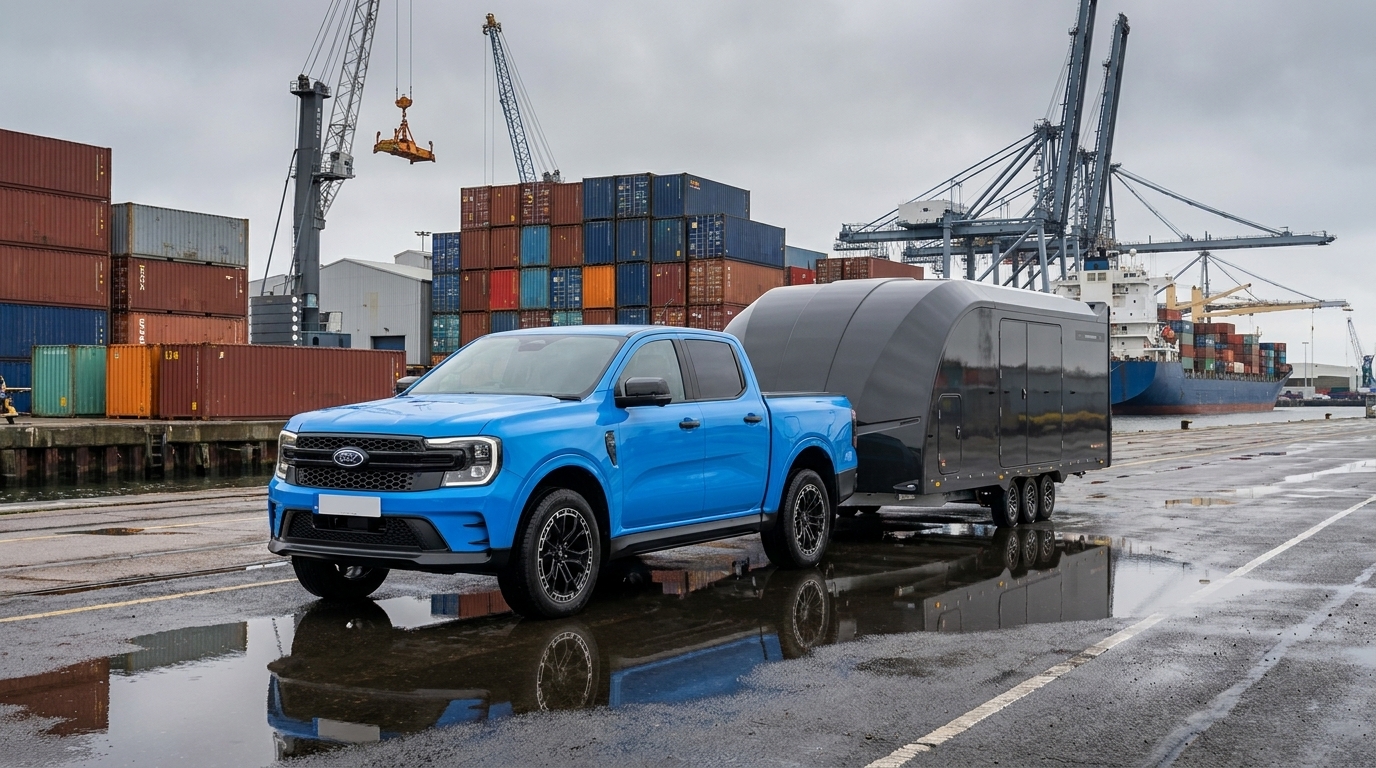
The structure is simple: we collect the car from your UK address, it travels on the trailer to the Channel, crosses with the trailer, and continues by road to the delivery address in Europe. One operator, one plan, one photographic condition report at each end. The reverse journey works identically for cars coming to the UK.
What you avoid is every logistical seam of doing it yourself: the drive to the coast, crossing bookings, fuel and tolls, overnight stops, the risk of a stone chip four hundred miles from home, and the small print of driving a UK-registered car abroad. For a valuable car, you also avoid the least controllable environment it will ever sit in: a public ferry deck or aire de service car park.
This is the service behind our car delivery to and from Europe page. For intercontinental shipments beyond Europe, the model changes: we handle the UK leg to and from the port, and your shipping agent handles the sea. That version is covered in our international vehicle delivery service.
Every European movement falls into one of two categories, and the category drives the paperwork. A temporary movement means the car goes and comes back: an event, a track weekend, a summer at a holiday home. The car remains UK-registered, and the formalities are comparatively light.
A permanent movement means the car is changing where it lives: relocation, sale to a European buyer, or an import to the UK. Since Brexit, permanent moves between the UK and EU are exports and imports in the customs sense, with declarations and potentially duty and VAT depending on direction, the car's origin, and your circumstances. This is manageable, and thousands of cars make the journey each year, but it needs to be planned before the car travels rather than discovered at a border.
The practical takeaway: tell us the purpose of the movement when you first enquire. It is the single piece of information that shapes everything else, and it is why our first questions are about the journey rather than just the postcodes.
The car crosses the Channel on the trailer, via the Channel Tunnel or ferry depending on the route, the schedule, and where the delivery lies. On the tunnel, the trailer rolls onto the shuttle and the car never sees open weather. On a ferry crossing, an enclosed trailer means the car is still protected while the trailer itself rides the vehicle deck, insulated from the salt-heavy air that coats everything on an open deck.
The honest point is that crossing choice is an operational decision, not a customer decision, and part of what you are paying for is not having to care. The crossing is booked, timed against the collection, and absorbed into the plan. What you see is a collection date at one end and a delivery window at the other.
Swipe through the common destinations
The most common destination: holiday homes, Le Mans and classic events, and Alpine winters. Northern France is the shortest European journey there is; the south is a proper trip the car is better off not driving.
Relocations and long winters on the costas. These are multi-day road legs where trailer transport saves the car two thousand miles of wear across a year of seasons.
Purchases from the German market flow to the UK; track cars flow the other way to the Nurburgring. Both directions are well-trodden routes for us.
Concours season, lakes-and-passes touring, and collector sales. Switzerland adds non-EU customs steps, which is exactly the kind of detail that gets planned in advance.
Track weekends at Spa-Francorchamps and the Ring, with paddock delivery timed to the event. The car arrives fresh and, thanks to the winch, comes home whatever happened out there.
Short hops to Belgium and the Netherlands for shows, sales, and collections. Close enough to be quick, cross-border enough to need the paperwork done properly.
Tell us where, when, and whether the car is coming back. Fixed quote for the whole door-to-door journey.
Paperwork is where European moves are won or lost, so here is the honest map by scenario. It is orientation, not legal advice; the specifics are confirmed for your movement when you book.
Distance dominates. Northern France, Belgium, and the Netherlands are typically a matter of days door to door. Germany, Switzerland, and central Europe sit in the middle band. Spain, Italy, and Portugal take longer, simply because a thousand-plus road miles follow the crossing. Paperwork adds lead time to permanent moves, so the sequencing matters: documents first, wheels second.
Two pieces of advice on timing. First, for events, plan the delivery to arrive with margin; a concours entry that lands the morning of the show has no slack for weather or traffic, and load-in windows are unforgiving. Second, for permanent moves, start the paperwork conversation weeks ahead, not days. The transport itself is the fast part; it is everything around it that rewards early planning.
The domestic logic from our enclosed vs open guide applies, amplified by distance. A European movement is many times longer than a typical UK job, which multiplies exposure on an open trailer: more spray, more grit, more weather systems, and the uniquely corrosive combination of salt air around ports and crossings. For anything valuable, low, or rare, the enclosed Race Transporter 7 is the default for European work.
For standard cars making a one-way relocation, open transport remains the economical choice, and an honest operator will tell you so. The condition reporting, soft-strap securing, and insured professional handling are identical either way; the decision is purely about how much environment the car should meet across fifteen hundred miles.
The European market is a happy hunting ground for UK buyers: left-hand-drive classics, German-supplied performance cars, and southern-European survivors free of two decades of British road salt. The transport part is straightforward: we collect from the dealer, auction, or private seller, document the car photographically at collection, and deliver it to your UK address.
The condition report earns its keep here more than anywhere. Buying unseen from another country stacks the usual risks of distance selling on top of a language barrier and a non-refundable deposit. Photographs taken by our driver at the seller's premises, before the car moves, are your same-day answer to whether the car matches the listing, while the import paperwork is planned alongside so the car does not arrive faster than its documents.
If the purchase is an auction lot, the compound mechanics from our auction delivery guide apply with a European accent: release references, collection slots, and storage clocks all exist on the continent too.
For a road trip you want to make, in a car built for it, driving to Europe is one of life's pleasures and no transporter should talk you out of it. The comparison matters for every other case: the car that needs to be there while you fly, the classic that should not do fifteen hundred miles, the purchase coming home, the relocation happening around a house move.
Price the drive honestly and it stops looking free. Crossings for car and passengers, fuel at European prices, tolls that accumulate startlingly on French autoroutes, at least one overnight each way on longer routes, and two to four days of your time. Add the car's side of the ledger: a couple of thousand miles of wear, weather, and chip exposure, plus the non-zero chance of a mechanical drama in a country where your breakdown cover's fine print suddenly matters. Then add the administrative side of driving abroad: UK stickers, headlight adjustment, local equipment rules, and insurance green-card questions that have grown teeth since Brexit.
Trailered transport converts all of that into one fixed number and zero days of your time, with the car arriving unworn and documented. For valuable cars the comparison is rarely close; for ordinary cars making a permanent move, it is at least a fair fight that the trailer often wins on time alone.
Preparation is mostly the same as domestic transport, quarter tank of fuel, valuables out, quirks declared, with a European layer on top. Documents travel with the movement, so the V5C and any customs paperwork need to be where the plan says they will be, not in a drawer at home. If the car is staying abroad for a season, think about what should travel inside it: wheels, covers, chargers, and spares can often accompany the car, declared and secured, which beats couriering them separately.
For event cars, pack for the event's own requirements: entry documentation, fire extinguisher and kit for track days, and whatever the organiser's scrutineering expects, because retrofitting any of it in a paddock abroad is miserable. For relocations, remember the destination country's rules take over once the car lives there: local registration timelines, equipment requirements, and inspection regimes vary, and the clock usually starts when the car arrives.
Finally, insurance at the far end deserves a thought before the car travels rather than after: a UK policy's European cover has limits in duration and scope, and a car spending months abroad may need arrangements of its own. None of this is complicated; all of it is easier arranged from a sofa in advance than discovered at a border or a paddock gate.
European movements are quoted as a single fixed price for the full door-to-door journey: UK collection, crossing, continental delivery, and the planning in between. Cost scales primarily with distance and trailer type. A northern-France delivery is the gentlest introduction; Iberia and southern Italy sit at the far end; enclosed transport carries its usual premium over open, narrowing proportionally as distance grows.
Compare it fairly: driving the car yourself costs crossings, fuel, tolls, hotels, and days of your time, plus fifteen hundred miles of wear on the car, all before anything goes wrong. For a valuable car, professional transport is routinely the cheaper option once the whole journey is priced honestly. Send both locations and the vehicle over WhatsApp and the real number comes back quickly.
Timing affects price here more than domestically. Event weekends concentrate demand on specific routes in specific weeks, so a Spa or Goodwood-season booking made months out prices and schedules better than the same journey requested in a panic. Flexible relocations, by contrast, can sometimes ride along with routes already running, which is the friendliest pricing there is. As with everything cross-border, the earlier the conversation starts, the more options exist, and options are what keep both the price and the plan comfortable.
Booking the wheels before the paperwork. On permanent moves, the customs sequence has to lead. A car that arrives at a border ahead of its declarations does not negotiate; it waits, at daily cost, while documents are retrofitted. Temporary trips are more forgiving, but the principle stands: the plan starts with the purpose of the movement, not the collection date.
Assuming EU habits still apply. A generation of owners learned Europe when the UK was inside the single market, and the muscle memory misleads: personal imports, temporary admissions, and VAT treatment all changed with Brexit. The rules are workable, but they are rules now, not formalities. Anyone quoting a permanent move without asking about the car's origin, value, and destination status is guessing on your behalf.
Under-speccing the trailer for the distance. A car that would travel open for two hours domestically faces fifteen times that exposure to weather systems, port environments, and unfamiliar road surfaces on a continental run. The enclosed threshold sits lower for European work, and pretending otherwise is a false economy measured in paint.
Leaving no margin at the destination. Events have load-in windows, ports have cut-offs, and holiday-home arrivals have keyholders with their own lives. A plan that lands the car with a day in hand costs little; a plan that lands it an hour before the deadline hands control of your weekend to the weather on the A16. Margin is the cheapest insurance on any cross-border movement, and the first thing we build into a schedule.
Collection point, destination, the car, and whether it is coming back. One fixed price for the whole journey.
The questions we answer before every European movement.